
/ About this event
We are returning to the Moon, this time to stay.
For the first time in human history, we are about to find out what happens when nations, companies, and rival superpowers try to build permanent settlements on a celestial body other than Earth: ground that no one owns and no one governs.
The 1967 Outer Space Treaty says plainly that no nation can claim the Moon, but it never imagined mining companies, permanent bases, or two competing blocs racing to the same resource-rich lunar south pole. The old framework is about to meet reality, and the gaps are enormous.
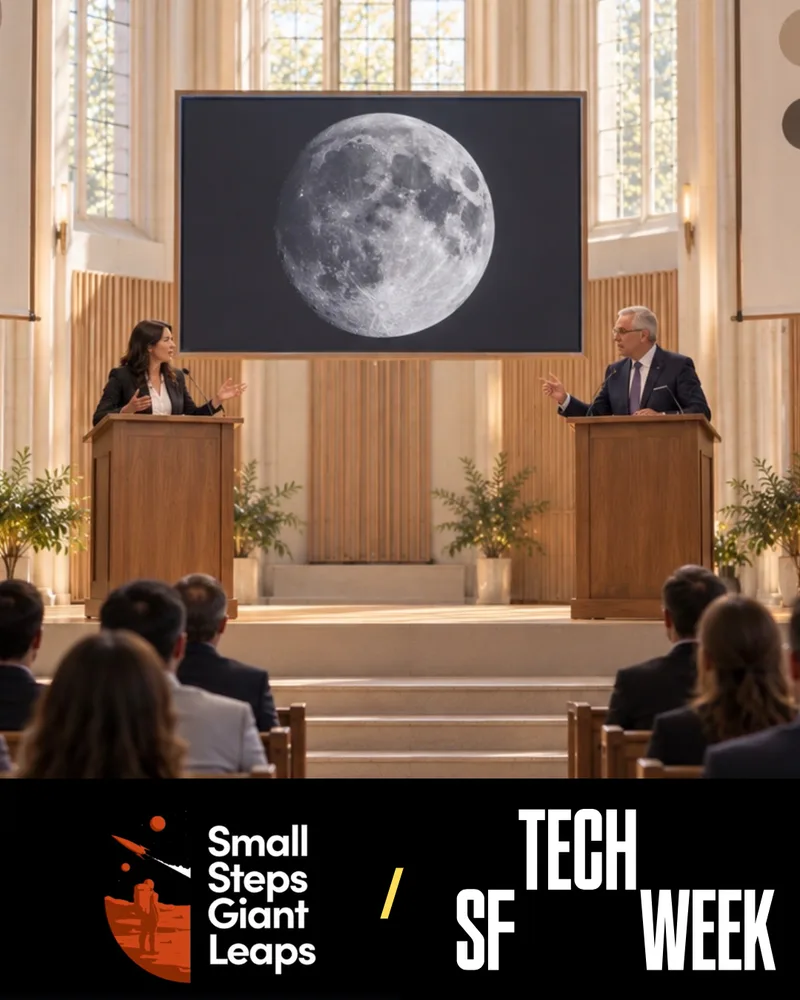
This isn't a panel. It's a forum. Experts in law, policy, defense, and space technology will lead discussions on four questions the treaties left unanswered:
Law and sovereignty. Nobody can own the Moon, but can you own what you dig out of it? The Artemis Accords assert a right to extract space resources without it counting as "national appropriation," and establish "safety zones" around operations that effectively create exclusive areas. Russia and China call this a unilateral rewriting of the 1967 treaty. Who's right?
Resources and the race. As of mid-2026, 70 nations have signed the U.S.-led Artemis Accords. China and Russia have refused, building a rival coalition around their International Lunar Research Station and recruiting partners with loans and technology transfers. Who gets the water ice, and who pays to get there?
Security and conflict. What happens when an Artemis "safety zone" overlaps with an ILRS operation? When two nations want the same crater of water ice? We'll explore the flashpoints: legal, diplomatic, and potentially physical.
Infrastructure and community. Someone has to set the standards for power, communications, and habitats, and the people who live there will need a way to make decisions together. Who runs daily life on the Moon?
How the evening works: Arrive and network. Meet the founders, investors, engineers, and policy minds in the room.
Break into groups. Join one of four expert-led tables and take on its question.
Head downstairs. Adjourn to the Interval café for refreshments and drinks, and keep the argument going.
Expect real disagreement among people who understand the law, the technology, and the stakes. The question underneath it all: can humanity govern a second world better than it has governed this one? This is not a lecture. It's an argument worth dressing up for.
This event is a part of #SFTechWeek—a week of events hosted by VCs and startups to bring together the tech ecosystem. Learn more at www.tech-week.com.


