
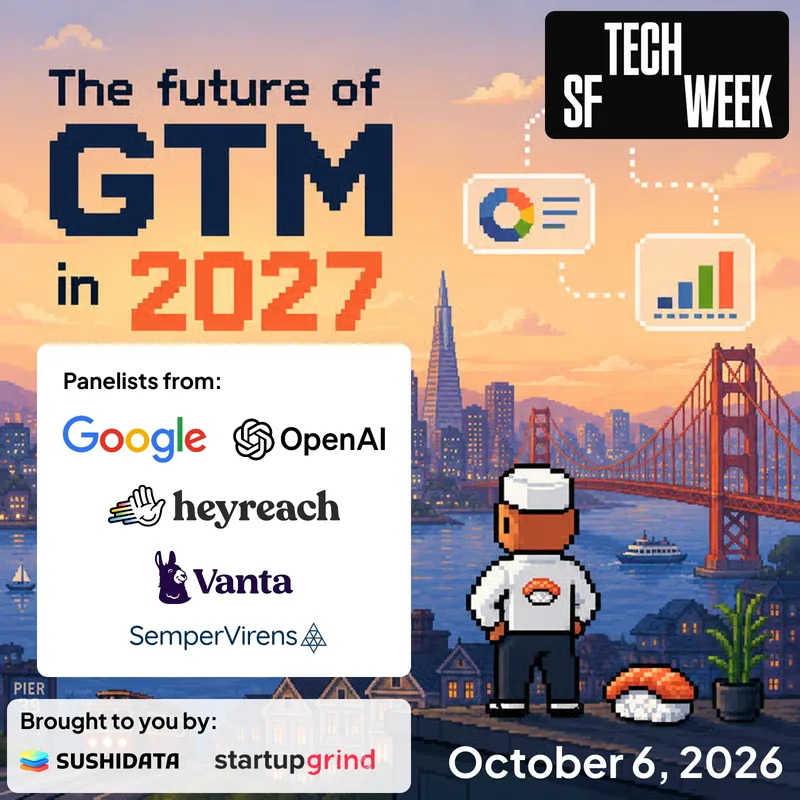
/ About this event
━━━━━━━━━━━━━━━━━━━━━━━━━━ ✦ THE FUTURE OF GTM IN 2027 ✦ ━━━━━━━━━━━━━━━━━━━━━━━━━━
Brought to you by Startup Grind × Sushidata × HeyReach
Part of #SFTechWeek
What will go-to-market actually look like in 2027?
AI is already changing how teams research accounts, find buyers, run outbound, qualify leads, personalize outreach, and close deals.
But we are still early, and there is a lot of noise around what is actually working.
For The Future of GTM in 2027, we are bringing together people who are building, investing in, selling, and deploying some of the technology shaping what comes next.
We will bring together perspectives from AI, enterprise SaaS, venture capital, sales leadership, outbound infrastructure, engineering, and GTM technology for a candid conversation about where sales, marketing, and revenue teams are heading.
We will talk about AI agents, signal-based selling, enrichment, outbound, enterprise adoption, distribution, GTM infrastructure, and how the role of the human seller changes as more of the workflow becomes automated.
At the center of the conversation is one big question:
IF EVERYONE HAS ACCESS TO POWERFUL AI, WHAT ACTUALLY BECOMES YOUR GTM ADVANTAGE?
━━━━━━━━━━━━━━━━━━━━━━━━━━ ✦ SPEAKERS ✦ ━━━━━━━━━━━━━━━━━━━━━━━━━━
【 NICK VELKOVSKI 】 CEO & Co-Founder, HeyReach
Nick is the CEO and Co-Founder of HeyReach, a platform helping sales teams and agencies scale LinkedIn outreach and outbound.
He brings the perspective of a founder building directly inside the modern outbound ecosystem, where automation, distribution, sales infrastructure, data, and AI are rapidly converging.
Nikola has seen firsthand what happens when teams gain the ability to run outbound at significantly greater scale, and where simply adding more automation creates more noise instead of more pipeline.
We are especially interested in his perspective on what comes after today's outbound stack.
What happens when AI can research prospects, identify signals, enrich accounts, personalize messaging, and execute campaigns at scale?
And in that world, what separates great GTM teams from everyone else?
━━━━━━━━━━━━━━━━━━━━━━━━━━
【 ALLISON BAUM GATES 】 General Partner, SemperVirens
Allison is a General Partner at SemperVirens, where she invests in AI-native companies across healthcare, work, and fintech.
GTM is a major part of how SemperVirens works with its portfolio. The firm has built a network of more than 200 executive advisors and facilitated more than 5,500 customer introductions, helping influence over $200M in portfolio ARR.
Before becoming an investor, Allison was an early operator at General Assembly and helped scale the company through its global expansion.
Today, she works with companies including Spring Health, Midi Health, Rula, and Multiverse on enterprise sales, partnerships, distribution, and growth.
She is also a Lecturer in Management at Stanford Graduate School of Business and the author of Breaking Into Venture. Her second book, Beyond the Pitch: The Psychology of Raising Venture Funding, is coming in February 2027.
Allison brings the investor perspective to the panel.
As AI makes it easier and cheaper to build products, what will actually differentiate the companies that win?
What does real distribution look like?
And what will investors look for when evaluating whether a company has a durable GTM advantage?
━━━━━━━━━━━━━━━━━━━━━━━━━━
【 ERIC MARTIN 】 VP of Sales, Vanta
Eric is VP of Sales at Vanta and has spent his career building and scaling B2B sales organizations.
Before and during his time at Vanta, his career has taken him through companies including DataFox and Swiftype, giving him experience across several stages of startup growth and multiple generations of B2B software.
Eric brings the perspective of someone who has actually had to build sales teams, hire and develop reps, compete in crowded markets, create repeatable processes, and turn emerging categories into scalable sales motions.
That makes his perspective especially important as AI begins entering almost every part of the sales workflow.
Which parts of selling should AI improve?
Which parts should disappear entirely?
Which parts should remain deeply human?
And what does the job of a great salesperson look like when research, prospecting, qualification, preparation, and follow-up can increasingly be handled by machines?
━━━━━━━━━━━━━━━━━━━━━━━━━━
【 KEVIN MURPHY 】 GTM, OpenAI
Kevin works on go-to-market at OpenAI, helping companies understand how frontier AI can be applied to real business problems.
He joined OpenAI after working at Snowflake, giving him a perspective that spans two major shifts in enterprise technology: the rise of modern cloud data infrastructure and the current transition toward AI becoming part of everyday business workflows.
Kevin brings a view from the front lines of enterprise AI adoption.
We want to understand what companies are actually doing with AI beyond experimentation, where adoption is happening fastest, what separates a successful deployment from a stalled pilot, and what organizations need to get right before AI becomes part of mission-critical workflows.
His perspective also raises an important GTM question:
What happens when powerful AI stops being a competitive differentiator by itself and becomes infrastructure available to nearly every company?
━━━━━━━━━━━━━━━━━━━━━━━━━━
【 GEORGE PORTILLO 】 GTM Architect | Sr. Engineering @ Google
George works at the intersection of engineering, product, AI, data, and go-to-market.
Alongside his work in senior engineering at Google, George is the technical founder behind Sushidata, where he has spent years building infrastructure designed to turn fragmented customer and GTM data into context that AI systems and agents can actually use.
His background spans product engineering, UX, data infrastructure, AI systems, and the realities of building and selling technology from the ground up as a startup founder.
That combination gives George a perspective from both sides of the market: building technology inside one of the world's largest technology companies while also figuring out distribution, outbound, enterprise sales, and GTM as a founder.
George will focus on the technical architecture behind the next generation of GTM.
How do agents, signals, enrichment, context, proprietary data, automation, and human decision-making fit together?
And if the underlying AI models become increasingly commoditized, where can companies still build real technical and GTM defensibility?
━━━━━━━━━━━━━━━━━━━━━━━━━━ ✦ MODERATOR ✦ ━━━━━━━━━━━━━━━━━━━━━━━━━━
【 BRIAN SPARKES 】 Host, Silicon Valley Impact Podcast | STAK Ventures
Brian is the host of the Silicon Valley Impact Podcast, formerly on 92.9 FM in the South Bay, and previously served as Head of Communication for Bay Angels, one of Silicon Valley's longest-running angel networks.
He has a deep background across entrepreneurship, venture capital, communication, ecosystem building, and higher education.
Brian has been a regular guest lecturer at Stanford Law School, where he has spoken about communication and emotional intelligence, and has spent years working with founders, investors, senior executives, and organizations across the Silicon Valley ecosystem.
Through his work, Brian helps companies and leaders think about strategic GTM communication, fundraising, positioning, and the relationships required to build and scale companies.
For The Future of GTM in 2027, Brian will push the conversation beyond prepared talking points and AI predictions, connecting the different perspectives on stage and digging into what founders and GTM leaders should actually do next.
━━━━━━━━━━━━━━━━━━━━━━━━━━ ✦ WHAT WE'LL TALK ABOUT ✦ ━━━━━━━━━━━━━━━━━━━━━━━━━━
Expect a practical conversation around questions like:
• Where is AI genuinely making GTM teams better, and where is it creating more noise?
• What happens to outbound when every company can personalize outreach at scale?
• Which parts of today's GTM stack may disappear?
• How are enterprises actually adopting AI?
• How does the role of the seller change as agents take on more of the workflow?
• What should companies start building today to stay ahead in 2027?
━━━━━━━━━━━━━━━━━━━━━━━━━━ ✦ NOT ANOTHER AI PREDICTION PANEL ✦ ━━━━━━━━━━━━━━━━━━━━━━━━━━
The goal is not to make another panel full of AI predictions.
We want to put people with genuinely different perspectives in the same conversation: founders, investors, sales leaders, AI operators, and engineers building the infrastructure behind it.
We want to talk about what is working now, what is starting to change, and what those changes mean for GTM teams heading into 2027.
━━━━━━━━━━━━━━━━━━━━━━━━━━ ✦ THE BIG QUESTION ✦ ━━━━━━━━━━━━━━━━━━━━━━━━━━
AI is quickly becoming available to everyone.
Soon, every GTM team may be able to research accounts, find buyers, personalize outreach, qualify opportunities, and automate large parts of the sales process.
So if everyone has the same powerful tools, what actually separates the teams that win?
That is the conversation we want to have.
━━━━━━━━━━━━━━━━━━━━━━━━━━ ✦ WHO SHOULD COME? ✦ ━━━━━━━━━━━━━━━━━━━━━━━━━━
Ideal for:
• Founders • GTM leaders • Sales and marketing executives • Revenue operators • AI builders • Investors • Anyone building the future of B2B growth
Come meet the founders, operators, investors, and builders working on the next generation of GTM, compare notes with other revenue leaders, and leave with a better understanding of what is coming next.
Additional guests from the GTM ecosystem will be announced soon.
━━━━━━━━━━━━━━━━━━━━━━━━━━ ✦ #SFTECHWEEK ✦ ━━━━━━━━━━━━━━━━━━━━━━━━━━
With ❤🔥, The Sushidata Team & Startup Grind
This event is a part of #SFTechWeek—a week of events hosted by VCs and startups to bring together the tech ecosystem. Learn more at www.tech-week.com


